


Posted by Lauren Gardner
on March 17, 2026
Bunk beds are a favourite among parents and kids alike. They save space, add a sense of adventure to bedrooms, and are perfect for siblings sharing a room.
In this Bunk Bed Buying Guide, we’ll cover everything you need to know about bunk bed safety, practical benefits, maintenance tips, and alternatives to ensure you make an informed decision.
Are Bunk Beds Safe for Children?
Yes, bunk beds are safe when they meet recognised safety standards and are used appropriately for a child’s age.
A sturdy bunk bed should be built from durable materials such as solid wood, laminated particleboard, or thick MDF, ensuring it can withstand daily use.
All GLTC bunk beds conform to the necessary British Safety Standards BS EN 747:2012+A1:2015 or the updated BS EN 747:2024, which test for durability of all areas of the bed, structural strength, weight-bearing capability and risks such as entrapment or falls.

Guard rails are another crucial safety feature. The top bunk should have secure rails on all sides and a clearly marked maximum mattress height indicator to ensure the mattress does not sit too high above the guard rail.
A well-designed ladder or stairs is equally important. A stable ladder with good grip makes climbing safer and more comfortable for children.
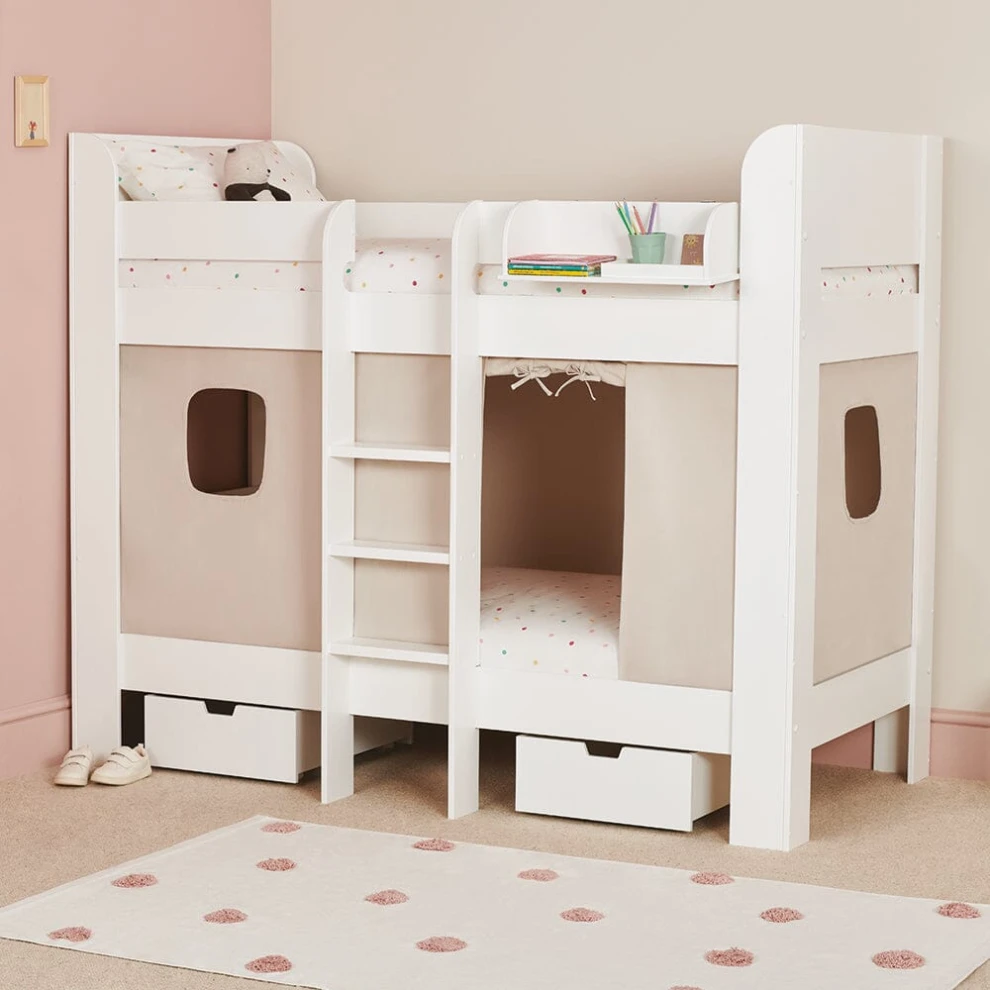
At GLTC we also carry out an additional “wobble test” on our raised beds. Climbing onto a bed that feels unstable can be unsettling for children and parents alike. Beds such as our Paddington Bunk Bed, with its L-shaped legs, provide excellent stability so children feel secure climbing up and down.
All GLTC bunk beds include a 5-year workmanship guarantee, giving parents extra peace of mind.
What Age Are Bunk Beds Suitable For?
Age suitability is one of the most critical safety considerations.
- Lower bunk: Suitable for children aged 4 years and above
- Upper bunk: Suitable for children aged 6 years and above
The higher age recommendation for the top bunk is due to the ladder access. Children need sufficient coordination and balance to climb safely both up and down.
If a child cannot comfortably climb the ladder independently, they may be too young for the upper bunk and could be at risk of falling.
Weight Limits for Bunk Beds
Bunk beds are designed primarily for children, but adults may occasionally use them.
Most GLTC bunk beds have a maximum weight limit of 100 kg per bed. As children grow older and taller, they may eventually outgrow bunk beds and benefit from a lower, more flexible bed option.
Choosing the Right Mattress for a Bunk Bed
Just like single beds, it’s essential to choose the correct mattress size and depth.
Bunk beds are typically available in two standard sizes:
- UK Single: 90 cm W × 190 cm L
- Euro Single: 90 cm W × 200 cm L
Another critical factor is mattress depth. The mattress on the upper bunk must not exceed the maximum height marking on the bed frame. If it sits too high, it can reduce the effectiveness of the guard rails and increase the risk of falling.
GLTC offers mattresses in 15 cm depth, which are designed to work safely with bunk and raised beds.
Still need more information on Bunk bed types? Read our blog on types of bunk beds here.
Bunk Bed Alternatives for Younger Children
If your child isn’t quite ready for a bunk bed, consider these safer alternatives:
- Toddler Beds with Guardrails: These are lower to the ground and provide a secure sleeping environment. The guard rails help prevent falls while offering the familiarity they need during the transition.
Explore Our Toddler-Friendly Beds
What to Consider When Buying a Bunk Bed
Buying a bunk bed is an investment, so it’s worth considering several practical factors before making a decision.
Room Size and Layout
Measure the room carefully before purchasing a bunk bed. Consider:
- Ceiling height
- Clearance above the top bunk
- Space for the ladder or stairs
Also think about room features such as windows, radiators, or alcoves. Many bunk beds offer different ladder positions so they can work in a variety of room layouts.
Bed Configuration
There are several bunk bed styles available:
- Traditional stacked bunk beds
- Triple bunk beds for larger families
- L-shaped bunk beds
- Convertible bunk beds that separate into two singles
Convertible beds offer excellent long-term flexibility. For example, the Lulworth Bunk Bed separates into two single beds, allowing it to continue being used into teenage years.
 Storage and Sleepover Options
If space is limited, look for bunk beds that offer built-in storage or additional sleeping options.
Some designs include:
- Under-bed drawers
- Shelving
- Trundle beds for sleepovers
For example, the Paddington Bunk Bed includes optional features such as a bed curtain for the lower bunk, creating a cosy reading or quiet space.
You can also add useful accessories such as:
- Bunky light for reading on the top bunk
- Clip-on bedside table for books or drinks
What Materials Are Best for Bunk Beds?
Strength and durability are essential when choosing a bunk bed.
Look for beds made from:
- Solid wood
- Laminated particleboard
- Thick MDF
These materials provide the structural strength needed for raised beds.
Why Bunk Beds Are Great for Small Bedrooms

One of the biggest advantages of bunk beds is their ability to maximise space.
By stacking two beds vertically, bunk beds free up valuable floor space for:
- Play areas
- Storage
- Desks or study zones
This makes them a popular choice for shared bedrooms or smaller homes.
Many GLTC bunk beds also include smart storage solutions to help keep children’s rooms organised.
Tips for Parents Setting Up Bunk Beds
Setting up a bunk bed properly is just as important as picking the right one.
Consider these safety tips:
- Avoid placing bunk beds near windows, radiators, or ceiling fans
- Position the bed where children can safely access the ladder
- Keep the surrounding area clear of hard or sharp objects
- Add a soft night light near the ladder for nighttime visibility
Assembly and Long-Term Maintenance
Bunk beds are more complex to assemble than standard beds.
If a professional assembly service is available, it can often be worth using it. Assembly teams are familiar with the products and can ensure the bed is built correctly and safely.
To keep your bunk bed safe and sturdy:
- Tighten bolts regularly to prevent movement in the frame
- Clean wooden surfaces gently with a soft cloth
- Keep all assembly instructions, hardware and spare parts
This allows you to reassemble the bunk beds in the future or convert them into single beds if the design allows.
Need more safety advice? Read our post on bunk bed safety here.
A Practical and Space-Saving Choice for Growing Families
Bunk beds can be a fun, practical and space-saving addition to your child’s room when safety and quality are prioritised.
GLTC’s bunk beds combine durable construction, thoughtful design and rigorous safety testing to help families make the most of their space.
With the right setup, your child’s bunk bed can become a safe, comfortable and exciting place to sleep, play and grow.
If you’d like more guidance, explore our Kids Bed Size Guide, our post on Space Saving Kids’ Beds or contact our friendly team for advice.
 |
 |
 |
 |
 |
Shop The Perfect Bed For Your Child Here
To discuss any of our kid’s beds in more detail, you can contact our friendly customer service team, info@greatlittletrading.co.uk.
